BRENTWOOD OFFICE
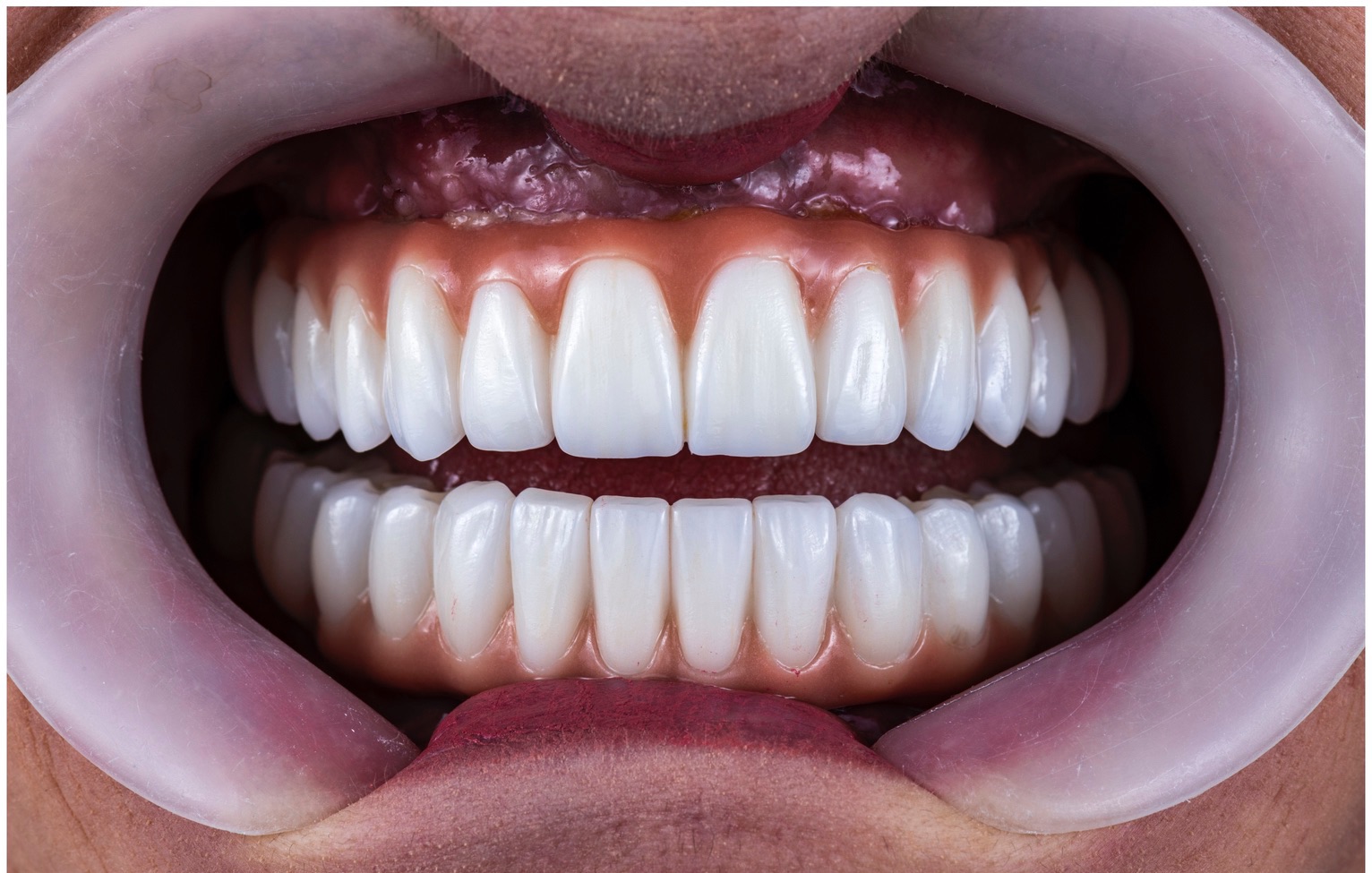
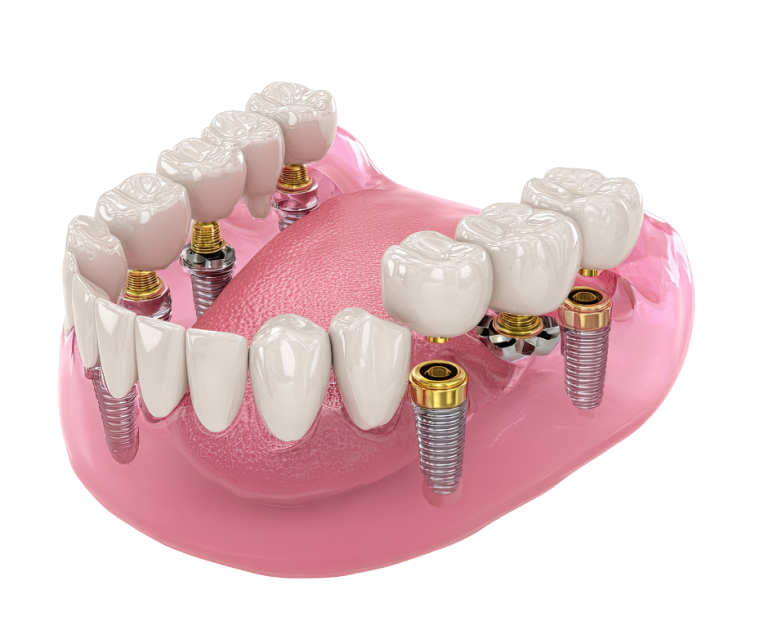
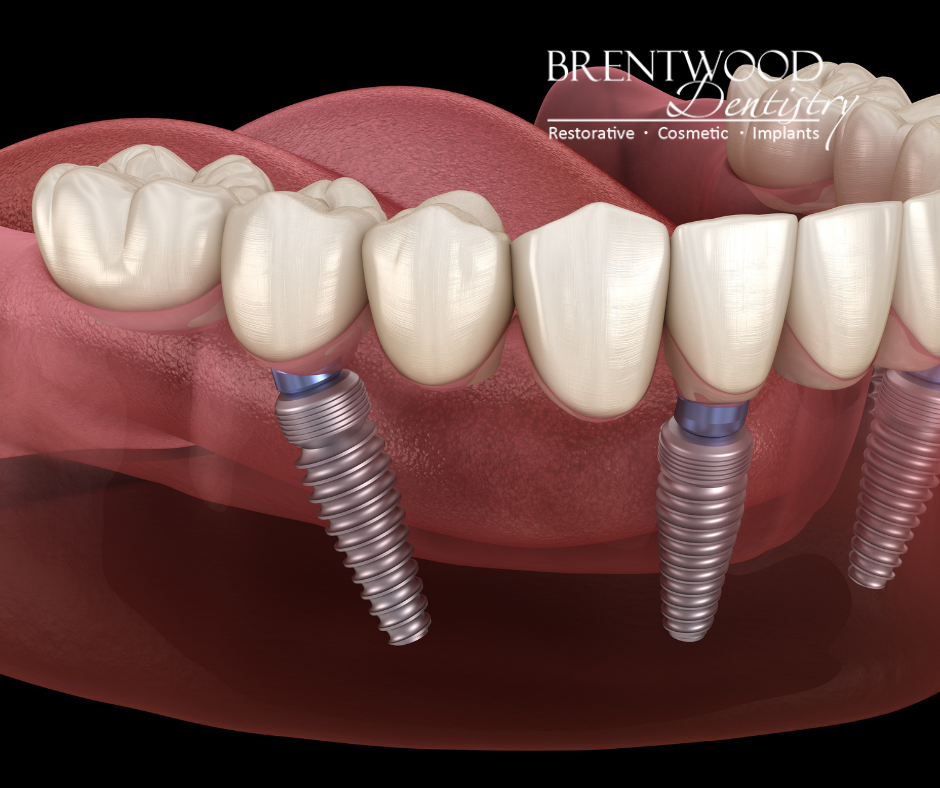
All-on-4® treatment provides patients with a full-arch prosthesis over four implants on the day of surgery. All-on-4® is designed to give edentulous patients full function of their mouth and full mouth restoration. It’s heavily advertised as providing 4 implants, but some situations may require more.
All-on-4® overdentures reduce the complexity of treatment, the number of surgeries, and the overall treatment time. It is less expensive compared with fixed implants.
All-on-4® dental implants, also known as hybrid dentures, use high-end denture teeth and acrylic for the best aesthetics, making it the most cost effective choice for any future repairs.
All-on-4 treatment has become a reliable option for patients who need to replace missing teeth across an entire arch. While it is often marketed as a streamlined solution, the real value lies in how it allows us to restore function and esthetics efficiently while maintaining long-term stability. When approached thoughtfully, it can serve as the foundation for a comprehensive smile makeover that balances both form and function.
At its core, All-on-4 involves placing four strategically positioned implants to support a full-arch prosthesis. In many cases, a provisional restoration can be delivered on the same day, which is a significant benefit for patients who want to avoid a prolonged period without teeth. That said, case selection and planning are everything. Not every patient is an ideal candidate for a strict four-implant configuration, and flexibility in approach is often what leads to better outcomes.
The primary goal of All-on-4 is to provide immediate stability and restore chewing function for patients who are fully edentulous or close to it. By angling the posterior implants, we can often avoid anatomical structures and reduce the need for bone grafting. This makes treatment more accessible for patients who may not have been candidates for traditional implant approaches.
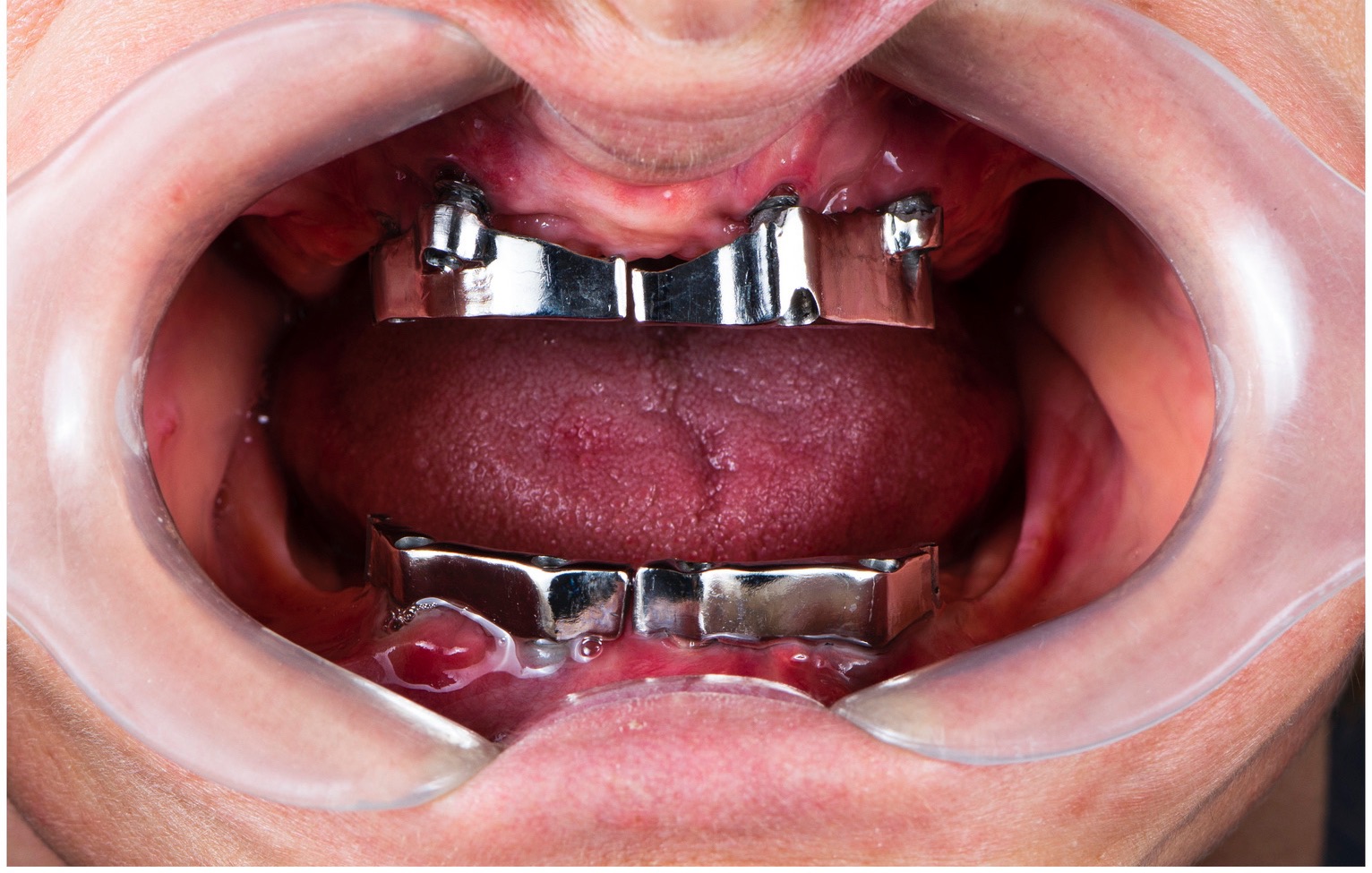
From a restorative standpoint, the prosthesis typically consists of an acrylic base reinforced with a metal substructure and high-quality denture teeth. While this design is sometimes viewed as a transitional solution, it can perform very well long term when maintained properly.
It is important to emphasize that the concept is not strictly limited to four implants. During the treatment process, we often modify the number based on bone quality, occlusion, and patient expectations. In some cases, adding implants can improve load distribution and longevity.
When discussing ways to replace missing teeth, patients are often comparing removable dentures, traditional implant bridges, and All-on-4. Each option has its place, but All-on-4 tends to offer a balance between efficiency and stability that appeals to a wide range of patients.
Removable dentures can restore appearance but often fall short in terms of function and comfort. Traditional implant-supported bridges, while highly durable, may require more implants and more extensive grafting. All-on-4 sits somewhere in between. It provides fixed support with fewer implants and typically a shorter treatment timeline.
From a patient perspective, the ability to walk out with a functional set of teeth on the day of surgery is often the deciding factor. From our perspective as clinicians, the appeal lies in predictable outcomes when proper protocols are followed.
In many cases, All-on-4 is not just about restoring missing teeth. It is part of a broader smile makeover strategy. Patients who have experienced years of dental breakdown often present with collapsed vertical dimension, worn dentition, and compromised esthetics.
This is where careful planning becomes essential. We are not simply placing implants and attaching a prosthesis. We are re-establishing facial support, lip posture, and overall smile harmony. Digital planning, wax-ups, and provisional restorations all play a role in ensuring that the final result aligns with the patient’s expectations.
Dr. Naim’s background in both biology and art is particularly relevant here. The artistic component of dentistry becomes very apparent in full-arch cases. Small adjustments in tooth position, shape, and shade can significantly influence the final outcome.
One of the advantages often associated with All-on-4 is the reduction in surgical complexity. By maximizing the use of available bone and minimizing the need for grafting, treatment can often be completed with fewer procedures.
This does not mean the process is simple. It still requires careful surgical execution and coordination between the surgical and restorative phases. However, compared to more extensive implant reconstructions, the overall pathway is often more streamlined.
For patients, this translates to fewer appointments and a shorter overall timeline. For clinicians, it means balancing efficiency with precision. Cutting corners is not an option, even in a protocol designed to simplify treatment.
Cost is always part of the conversation, especially when patients are exploring ways to replace missing teeth. All-on-4 is generally more cost-effective than placing a larger number of implants with individual crowns or bridges. The use of acrylic prosthetic materials also makes repairs more manageable over time.
That said, it is important to frame the discussion in terms of long-term value rather than initial cost alone. Maintenance is a key factor. These prostheses require regular follow-up, professional cleanings, and occasional adjustments or repairs.
Patients should understand that while the initial investment may be lower than some alternatives, ongoing care is essential to protect that investment. Clear expectations upfront tend to lead to better compliance and more predictable outcomes.
Despite the name, All-on-4 is not always limited to four implants. In patients with higher bite forces, parafunctional habits, or less favorable bone quality, placing additional implants can provide better support.
All-on-6 configurations are a common variation. They allow for improved load distribution and may support different restorative materials, including zirconia in some cases. The decision ultimately comes down to a combination of anatomical factors and restorative goals.
In a treatment plan, it is important to remain flexible and avoid forcing a patient into a specific protocol simply because it is well known or widely marketed.
The traditional All-on-4 prosthesis uses an acrylic base with denture teeth, which offers a good balance between esthetics and reparability. However, material selection should always be tailored to the patient.
Some patients prioritize durability and may be candidates for more rigid materials in the final restoration. Others may benefit from the shock-absorbing qualities of acrylic, especially in the provisional phase.
Esthetics are also highly customizable. Tooth shape, shade, and arrangement can all be adjusted to achieve a natural appearance. This is where the smile makeover aspect becomes particularly important. The goal is not just to restore teeth, but to create a result that feels consistent with the patient’s overall facial features.
All-on-4 treatment is not a one-time event. It is part of an ongoing relationship between the patient and the dental team. Success depends on proper planning, precise execution, and consistent maintenance.
Our Brentwood dentist approaches these cases with a focus on both technical accuracy and patient experience. With more than 25 years of clinical experience, she integrates advanced restorative techniques with a strong attention to detail.
For patients considering how to replace missing teeth, All-on-4 offers a practical and effective solution. When incorporated into a comprehensive smile makeover plan, it can restore not only function, but also confidence and quality of life.
Whether you need routine dental care or advanced treatments, the team at Brentwood Dentistry is here to help you achieve and maintain a healthy, beautiful smile for life.

BRENTWOOD OFFICE
Monday: 8am – 5pm
Tuesday: 8am – 5pm
Wednesday: 8am – 5pm
Thursday: 8am – 5pm
Friday: 8am – 5pm
Saturday: Closed
Sunday: Closed